Diverticular Disease: Symptoms, Causes, Diet & Treatment
Many people first hear the word “diverticular” after a routine colonoscopy or an unexpected trip to the emergency room.
This guide explains what diverticular disease is, what is the difference between diverticulitis and diverticular disease, the symptoms and warning signs to watch for, what triggers a flare up of diverticular disease, and the diet and treatment options that help keep it under control. At Center for Diabetes and Cardiometabolic Health (CDCH) our gastroenterology team sees patients from Daly City, San Francisco, and the surrounding Bay Area for diagnosis and ongoing care.
Concerned about digestive symptoms? Book a consultation with our gastroenterology specialists today.
What Is Diverticular Disease?
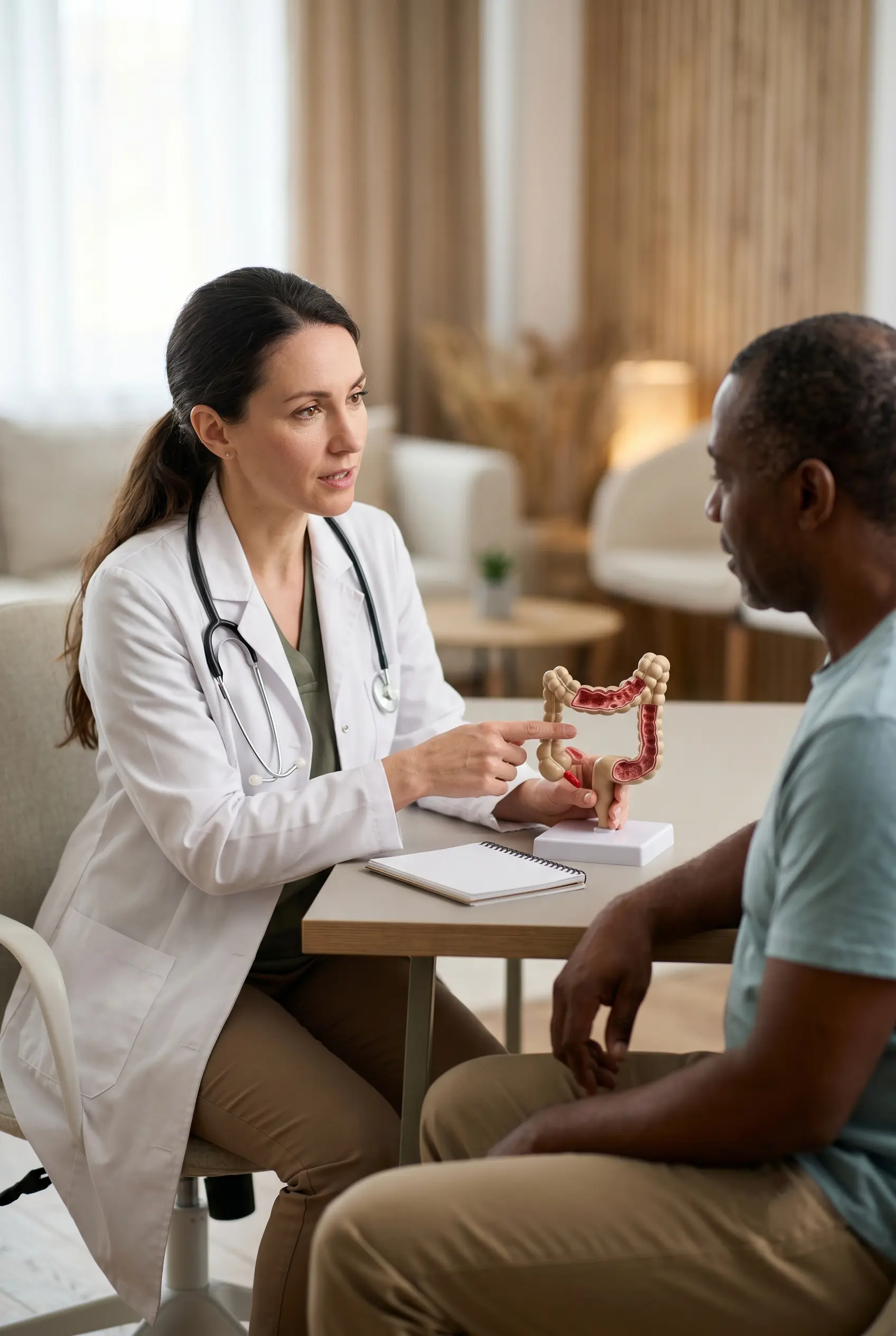
Diverticular disease describes a group of related conditions that affect small pouches, called diverticula, that can form in the wall of the colon. These pouches are common, especially after age 40, and on their own usually cause no problems at all.
Diverticula
Small bulging pouches that form in the colon wall
Diverticulosis
The presence of these pouches without any symptoms.
Diverticular disease
Diverticula that are causing symptoms, such as pain or bleeding.
Diverticulitis
Inflammation or infection of one or more pouches.
What is the difference between diverticulitis and diverticular disease?
Diverticular disease is the broader term for any symptomatic pouch-related problem, while diverticulitis specifically means those pouches have become inflamed or infected. Diverticulitis is the more urgent of the two and often needs prompt treatment.
Symptoms of Diverticular Disease and Diverticulitis
Symptoms vary depending on whether the diverticula are simply present, causing mild disease symptoms, or actively inflamed.
What Does Poop Look Like With Diverticulitis?
Stool changes are common with diverticular disease. You may notice looser stools, narrower stools, mucus, or visible blood.
Bleeding from diverticular disease, also called diverticular bleeding, usually causes painless rectal bleeding with bright red or maroon blood in the stool.
Because this bleeding can occasionally be heavy, any visible blood in your stool deserves prompt medical evaluation rather than a wait-and-see approach.
Diverticular Disease Symptoms
- Abdominal pain or cramping, often in the lower left side
- Bloating
- Constipation
- Diverticular disease diarrhea, or alternating bouts of diarrhea and constipation
Diverticulitis Symptoms (Flare-Up)
A flare up of diverticular disease, or acute diverticulitis, tends to come on more suddenly and feel more severe:
- Severe lower left abdominal pain
- Fever and chills
- Nausea and vomiting
- Tenderness in the abdomen, especially to touch
Causes and Risk Factors
Diverticular disease develops gradually, and several factors influence who is more likely to develop symptomatic pouches.
Dietary Factors
- A low-fiber diet, which increases pressure inside the colon
- High intake of red meat
- Low water intake

Lifestyle Factors
- Obesity
- Smoking
- Lack of regular exercise
Other Risk Factors
- Age, with risk rising significantly after 50 to 60
- Family history, since diverticular disease can be genetic
- Certain medications, including some pain relievers and steroids
- Repeated straining during bowel movements
Is it genetic?
Family history does appear to play a role, and people with a close relative who has had diverticular disease or diverticulitis may have a somewhat higher risk themselves, independent of diet and lifestyle.
Can Stress Cause It?
Diverticular disease and stress are linked in a more indirect way. Stress itself does not appear to create the pouches in the colon wall, but ongoing stress can affect gut motility, eating habits, and inflammation in ways that may worsen symptoms or trigger flares in people who already have diverticula.
Colon Cancer Risk?
Diverticular disease colon cancer risk is a common worry, but having diverticula does not directly cause cancer. The two conditions can share overlapping symptoms, such as bleeding or changes in bowel habits, which is why new or unexplained symptoms should always be investigated rather than assumed to be diverticular in origin.
How Is Diverticular Disease Diagnosed?
Diagnosis usually starts with a conversation about your symptoms and a physical exam, followed by targeted testing to confirm the diagnosis and rule out other conditions.
Physical exam
Checking for abdominal tenderness, particularly in the lower left abdomen.
Imaging
A CT scan is the standard test for suspected diverticulitis; a barium enema or virtual colonoscopy may be used in other situations.
Visual inspection
Colonoscopy or flexible sigmoidoscopy allows direct viewing of the colon lining, usually once any acute inflammation has settled.
Laboratory tests
Blood tests, stool samples, and urine tests help assess infection and rule out other cause of your symptoms.

Understanding your diagnosis is the first step.
Our specialists can walk you through your results in plain language and build a personalised plan.
Differential Diagnosis
Crohn's Disease vs Diverticulitis
This is a comparison your doctor may also consider, since both can cause abdominal pain, diarrhea, and inflammation on imaging.
Crohn's disease is a chronic inflammatory bowel condition that can affect any part of the digestive tract, while diverticulitis is specifically tied to infection or inflammation of colon pouches. Distinguishing between the two sometimes requires colonoscopy with biopsy, especially when symptoms don't follow a typical pattern.

Diet and Treatment for Diverticular Disease
Treatment depends on whether you have stable diverticular disease or an active flare, but diet plays a central role at every stage.
Diet for Diverticular Disease
Diet for diverticular disease has shifted in recent years. A low fibre diet for diverticular disease used to be standard advice, but current guidance generally favors a high-fiber approach once any acute flare has resolved, since fiber helps reduce pressure in the colon over time. During an active flare, your physician may recommend a temporary low-fiber or liquid diet to give the bowel a rest, before gradually reintroducing fiber as symptoms improve.
High-fiber foods, introduced gradually once a flare has settled
Increased fluid intake to support healthy digestion
Bowel rest, often with a liquid or low-residue diet, during active flares
Medical Management
During a flare, your physician will tailor treatment to the severity of your symptoms and may recommend a combination of the following, prescribed and monitored under their care:
- Treating any underlying infection
- Pain relief appropriate to your symptoms and medical history
- Easing bowel spasm and cramping
- Supporting regular, comfortable bowel movements
New Treatments for Diverticulitis
Research into new treatments for diverticulitis continues to evolve, including refined approaches to outpatient management for milder cases, more selective use of infection-fighting treatment, and minimally invasive techniques for draining complications such as abscesses without open surgery. Your specialist can advise which current approaches are appropriate for your situation.
Surgical Treatment
Surgical treatment for diverticular disease is generally reserved for recurrent severe flares, complications, or cases that don't respond to other management. Options include:
- Colectomy: surgical removal of the affected segment of colon
- Laparoscopic or open surgery, depending on complexity and complications
- Abscess drainage, often performed using imaging guidance
- Temporary stoma (colostomy or ileostomy) in select cases, to allow the bowel to heal

Why Choose Our Specialists for Diverticular Disease Care
- Specialist expertise in diverticular disease, diverticulitis, and related bowel conditions
- Access to CT imaging, colonoscopy, and flexible sigmoidoscopy on site
- Individualised dietary guidance for both flare management and long-term prevention
- A coordinated approach between gastroenterology, radiology, and surgery when needed
- Compassionate care for patients managing recurrent or chronic symptoms
Ready to get answers about your digestive symptoms? Book a consultation with our gastroenterology specialists today.
Meet Our Specialists
Living with diverticular disease, especially recurrent flares, can be frustrating and uncertain. Our gastroenterology team brings years of dedicated experience diagnosing and managing diverticular disease and diverticulitis for patients throughout Daly City and the greater San Francisco area.


Board-Certified
All providers meet the highest standards of care
Same-Week Appointments
Quick access to expert care when you need it
Local to Bay Area
Serving Daly City, San Francisco & surrounding areas
Trusted Digestive Care Close to Home in Daly City, Near San Francisco
Searching for a gastroenterologist near you in the Bay Area? At Our Center for Diabetes and Cardiometabolic Health (CDCH) is based in Daly City, just minutes from San Francisco, South San Francisco, and Pacifica. We see patients from across the region for diagnosis, flare management, and ongoing care, so specialist digestive health support is never far from home.
Ready to get answers about your digestive symptoms? Book a consultation with our gastroenterology specialists today.
Frequently Asked Questions

Diverticular disease is the general term for symptomatic diverticula, such as pain, bloating, or bleeding. Diverticulitis is a specific complication where one or more pouches become inflamed or infected, usually causing more sudden and severe symptoms.
Stool can become looser, narrower, or mucus-streaked, and some people notice bright red or dark, tarry blood. Any visible blood in the stool should be checked by a doctor rather than monitored at home.
Outside of a flare, a high-fiber diet with plenty of fluids is generally recommended to keep stools soft and reduce pressure in the colon. During an active flare, a temporary low-fiber or liquid diet is often used until symptoms ease, before fiber is reintroduced gradually.
Stress doesn't appear to directly cause the pouches that define diverticular disease, but it can influence gut function and may contribute to flares in people who already have diverticula.
Family history does seem to increase risk somewhat, suggesting a genetic component alongside diet and lifestyle factors, though no single inherited cause has been identified.
Having diverticula doesn't directly raise your risk of colon cancer, but the two conditions can cause similar symptoms. New or persistent changes in bowel habits or unexplained bleeding should always be evaluated.
Crohn's disease vs diverticulitis is a meaningful distinction, since both can cause abdominal pain and inflammation. Crohn's is a chronic inflammatory bowel disease that can affect any part of the digestive tract, while diverticulitis is localized inflammation or infection of colon pouches. The two sometimes require similar testing to tell apart.
Yes. Management continues to shift toward more outpatient care for mild cases, more selective use of infection-fighting medication, and minimally invasive options for complications like abscesses, reducing the need for major surgery in many cases.
Take the Next Step Toward Better Digestive Health
Diverticular disease can be unpredictable, but with the right diagnosis and a personalised plan, most people manage it well. Our gastroenterology team offers expert, compassionate care to patients in Daly City, San Francisco, and nearby communities, whether you need a first diagnosis, flare management, or guidance on long-term prevention.
- Same-week appointments available
- Board-Certified Specialists
- Personalized Treatment Plans