Cirrhosis of the Liver Care in Daly City, San Francisco
The Center for Diabetes and Cardiometabolic Health offers comprehensive evaluation and long-term management for patients with Cirrhosis of the Liver in Daly City and San Francisco. Our team identifies the underlying cause of your liver disease, monitors its progression, assesses potential complications, and provides ongoing support to help manage your liver health.

What Happens in Liver Cirrhosis?
Liver cirrhosis develops when long-term liver damage causes healthy liver tissue to be gradually replaced by scar tissue.
As scarring increases, the liver becomes less able to perform important functions such as filtering toxins, processing nutrients, and supporting digestion.
In most patients, cirrhosis develops gradually over several years.
Common causes may include:
- Chronic fatty liver disease
- Viral hepatitis
- Long-term alcohol-related liver damage
- Autoimmune liver disorders
- Metabolic disease and diabetes-related liver injury

What Causes Cirrhosis of the Liver?
Several conditions can cause chronic liver damage that eventually leads to cirrhosis. Identifying the exact cause is the first and most important step in building the right treatment and monitoring plan for every patient at CDCH.
- Chronic alcohol-related liver disease caused by long-term heavy alcohol use
- Nonalcoholic fatty liver disease and nonalcoholic steatohepatitis (NASH)
- Chronic viral hepatitis B and hepatitis C infections
- Primary biliary cholangitis (PBC), an autoimmune disease that slowly damages the bile ducts and leads to chronic liver scarring over time
- Autoimmune hepatitis, where the immune system attacks liver cells
- Inherited liver conditions, including hemochromatosis and Wilson's disease
- Metabolic disease, Obesity, and diabetes-related chronic liver inflammation
Certain medications can also affect liver health and should be reviewed with a healthcare professional.
Fatty Liver Disease vs Cirrhosis
Both involve liver damage, but at very different stages of progression.
Fatty Liver Disease
Fatty liver disease develops when excess fat builds up inside the liver cells. In its early stages, it may cause little or no permanent damage to the liver structure. However, when fatty liver progresses to nonalcoholic steatohepatitis, ongoing inflammation begins to damage liver cells more aggressively over time.
Cirrhosis
Cirrhosis develops when years of chronic liver injury cause healthy tissue to be permanently replaced by scar tissue. Not every patient with fatty liver disease develops cirrhosis. However, if left untreated, inflammation caused by obesity, diabetes, or metabolic dysfunction can increase the risk of progressive fibrosis and eventually cirrhosis.
What Cirrhosis Symptoms Patients Notice and When
Cirrhosis can cause many signs and symptoms, but they often do not appear until the disease has significantly progressed. This is why many patients discover cirrhosis only after routine testing or when a complication develops.
Early cirrhosis symptoms may include:
- Persistent fatigue and weakness that does not improve with rest
- Loss of appetite and unintentional weight loss
- Mild upper right abdominal discomfort or pressure
- Intermittent nausea without an obvious cause
- Itchy skin caused by bile salt buildup in the bloodstream
As liver damage advances, more noticeable symptoms develop:
- Jaundice causes yellowing of the skin and whites of the eyes
- Swelling in the legs and ankles from fluid retention
- Abdominal swelling from fluid buildup, known as ascites
- Easy bruising and bleeding due to reduced clotting protein production
- Mental confusion or difficulty concentrating in the advanced stages of the disease
Seek immediate medical attention if you experience sudden or severe changes in your condition or if your symptoms worsen rapidly.
Serious Complications of Cirrhosis That Need Medical Attention
As cirrhosis progresses, the liver gradually loses its ability to perform essential functions. Cirrhosis can lead to serious complications that affect multiple body systems and require close medical supervision.
Portal Hypertension:
Increased pressure in the portal vein due to liver scarring, leading to several serious complications.
Varices and Gastrointestinal Bleeding:
Enlarged veins in the esophagus or stomach that can rupture and cause life-threatening bleeding.
Ascites:
Fluid buildup in the abdomen that causes swelling, discomfort, and increased infection risk.
Hepatic Encephalopathy:
Toxin buildup affecting brain function, causing confusion, memory issues, and severe mental changes.
Liver Cancer:
Cirrhosis increases the risk of liver cancer, making regular screening and monitoring essential.
The 4 Stages of Cirrhosis of the Liver
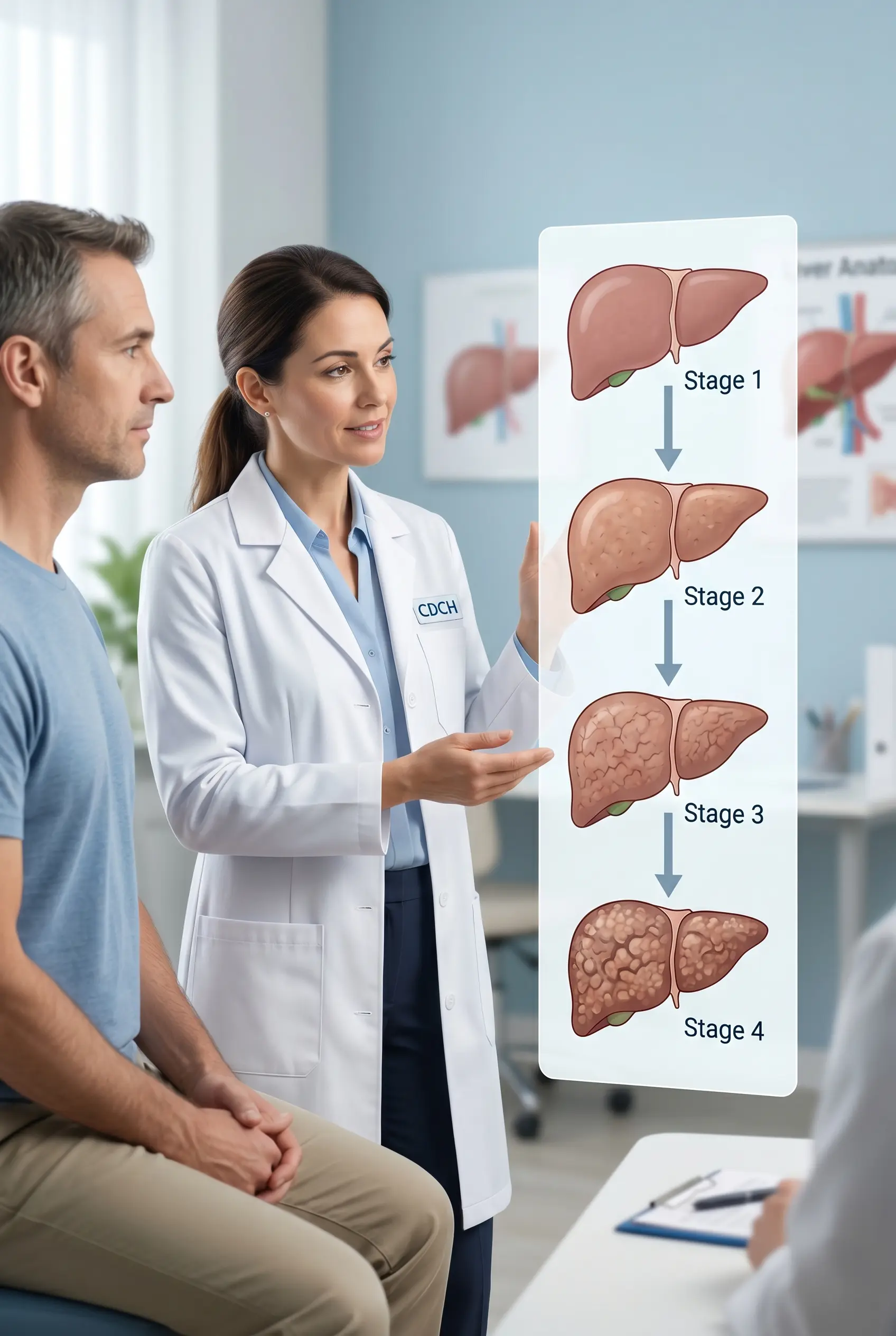
Understanding the stages of liver cirrhosis helps you and our team make the right decisions about monitoring, evaluation, and complication prevention. The first two stages fall under the category of compensated cirrhosis. The last two stages fall under decompensated cirrhosis.
Stage 1: Early Fibrosis With No Complications
At this stage, liver scarring has begun, but the liver is still able to perform most of its essential functions. Most patients have no noticeable symptoms. Many are diagnosed only through routine blood testing or imaging. The liver manages its workload despite early fibrosis. Early evaluation and management may help slow disease progression.
Stage 2: Significant Fibrosis With Portal Hypertension Beginning
Scarring has progressed, and portal vein pressure is rising. The liver still compensates reasonably well, but signs of strain begin to emerge. Some patients develop varices, enlarged blood vessels in the esophagus, at this stage. Most patients still have manageable symptoms. Regular monitoring and consistent treatment of the underlying cause remain critical at this point.
Stage 3: Decompensated Cirrhosis With Active Complications
At this stage, the liver can no longer adequately compensate for the damage it has sustained. Serious complications begin to develop at this stage. Patients may develop ascites, a significant accumulation of abdominal fluid. Variceal bleeding becomes a real and serious risk. Hepatic encephalopathy, causing confusion and cognitive changes, may also occur. This stage requires closer, more frequent medical monitoring and active management of complications.
Stage 4: End Stage Liver Disease and Liver Failure
This is the most advanced stage of liver cirrhosis. The liver has sustained such extensive scarring that it can no longer perform its essential functions. According to Johns Hopkins Medicine, this stage is called liver failure or end-stage liver disease. Patients experience severe jaundice, profound muscle loss, significant abdominal fluid accumulation, serious bleeding risk, and advanced hepatic encephalopathy. Some patients with advanced liver failure may require liver transplant evaluation.
Our Cirrhosis Care Services in Daly City, San Francisco
At CDCH, we provide complete and supportive long-term care for patients living with cirrhosis of the liver. Every service is integrated into a personalized care plan tailored to your specific condition, complication risks, and overall metabolic health.

Personalized Liver Disease Management
We work closely with you to create a care plan tailored to your liver disease stage, symptoms, and health goals. Our team helps you understand your condition clearly. We explain your symptoms, discuss changes that may require medical attention, and help you stay actively involved in managing your liver health between appointments.

Nutritional and Dietary Support
Chronic liver disease can affect your appetite, digestion, and nutritional balance over time. Our team gives you practical nutrition guidance that supports overall wellness and liver health without overwhelming your daily routine.

Ascites and Fluid Retention Support
We monitor your abdominal swelling and leg fluid retention closely at every visit. Our team provides general education about nutrition and fluid-related lifestyle considerations, recognizing warning signs, and managing day-to-day discomfort caused by fluid buildup.

Metabolic and Diabetes Focused Care
Obesity, insulin resistance, and diabetes can contribute significantly to the progression of liver disease. Our team manages your blood sugar, weight, and cardiovascular risk factors, alongside your liver care. Managing these conditions together supports a more coordinated approach to care.

Portal Hypertension and Variceal Monitoring
We watch closely for signs of portal hypertension and variceal complications. We coordinate upper endoscopy (EGD) evaluations to screen for esophageal varices in patients at increased bleeding risk. We monitor closely for complications and recommend appropriate follow-up when needed.

Digestive Health and GI Support
We support patients experiencing nausea, bloating, and other digestive symptoms associated with cirrhosis. Our team coordinates GI evaluations when symptoms affect your eating, digestion, or daily comfort levels.

Liver Cancer Surveillance
We schedule liver cancer screening every six months for cirrhosis patients as recommended by NIDDK clinical guidelines. Our team uses blood tests and imaging to detect any changes early. Early detection may provide more management options.

Long-Term Monitoring and Preventive Liver Care
We track your liver function tests, imaging results, and symptom changes at every scheduled follow-up. Our team adjusts your care plan based on how your condition is progressing over time. We provide ongoing follow-up and long-term liver health monitoring.

Why Patients Choose CDCH for Liver Disease Care
Patients trust CDCH because we provide coordinated digestive, metabolic, and liver-focused care in one setting.
At CDCH, we:
- Evaluate chronic liver disease and fibrosis progression
- Monitor digestive and metabolic complications together
- Provide FibroScan and liver-focused diagnostic evaluation
- Offer GI and endoscopy services when appropriate
- Support long-term metabolic and nutritional health
- Create individualized monitoring plans for chronic liver conditions
We focus on helping patients better understand their condition and participate actively in long-term liver health management.
Meet Our Experts
Our liver and digestive health team provides comprehensive evaluation, long-term support, and compassionate care for patients with chronic liver conditions at every cirrhosis appointment. We make every effort to keep your care clear, coordinated, and compassionate at every visit. We explain your findings in plain terms, answer every question you bring, and stay actively involved in your liver health management well beyond your initial evaluation at our Daly City clinic.


Board-Certified
All providers meet the highest standards of care
Same-Week Appointments
Quick access to expert care when you need it
Local to Bay Area
Serving Daly City, San Francisco & surrounding areas
Trusted Liver Cirrhosis Care Close to Home in Daly City, San Francisco
Are you looking for expert care for cirrhosis of the liver near you in the Bay Area? Our CDCH clinic is conveniently located in Daly City, just minutes from San Francisco, South San Francisco, and Pacifica. We serve patients across the Bay Area with advanced liver diagnostic testing and a patient-first approach that provides coordinated support for patients managing chronic liver disease.
FAQs About Cirrhosis of the Liver Care in Daly City, San Francisco

No. Liver cirrhosis itself cannot spread from person to person. However, some conditions that lead to cirrhosis, such as viral hepatitis B and C, are contagious. Treating these infections early significantly reduces the risk of long-term liver damage and cirrhosis development.
Diabetes itself does not directly scar the liver, but long-term metabolic dysfunction can increase the risk of fatty liver disease and chronic liver inflammation. Over time, untreated fatty liver disease may progress toward fibrosis and cirrhosis in some patients. Regular medical follow-up and metabolic health monitoring are important for reducing complications.
This phrase refers to how abdominal fluid accumulation may affect the long-term progression of liver disease and overall health. Prognosis depends on liver function, treatment response, nutritional status, and the presence of other complications. Patients with ascites often require closer monitoring and long-term liver management.
Researchers continue studying new therapies focused on liver fibrosis, inflammation, and metabolic liver disease. Current management mainly focuses on slowing progression, monitoring complications, and supporting liver function.
Many patients report symptom improvement after lifestyle changes or treating the underlying cause. However, advanced liver scarring is generally not fully reversible. The goal of care at CDCH is to slow progression, prevent complications, and protect your quality of life through consistent long-term medical support.
Protect Your Liver Health with Early Evaluation. Get a Complete Evaluation at CDCH Today.
- Same-week appointments available
- Board-Certified Specialists
- Personalized Treatment Plans