Crohn's Disease Treatment in Daly City, San Francisco
The Center for Diabetes and Metabolic Health (CDCH) provides thorough evaluation and personalized Crohn’s disease treatment in Daly City, San Francisco. Our team does comprehensive evaluations to find where and how much inflammation is in your bowel, identify what makes your symptoms worse, and check how well your digestive system is working. Based on these findings, we create a personalized treatment plan focused on stopping flares, preventing serious problems, and keeping your bowel working well long-term so you can live your best life.

What Is Crohn's Disease?
Crohn’s disease is a long-term inflammatory bowel disease that causes deep inflammation throughout your digestive tract.
The condition can affect any part from your mouth to your rectum, but most often affects the end of your small intestine and the start of your large intestine. Unlike other bowel diseases, Crohn’s inflammation goes through all layers of your bowel wall, not just the surface.
When inflammation is not treated or controlled well, it causes scarring, narrows your bowel, and can create tunnels called fistulas and pockets of infection called abscesses. The disease usually comes and goes in cycles. You might have calm periods with no symptoms called remission, then periods where symptoms return and inflammation is active again.
Patient Experience
What Does Crohn's Disease Feel Like?
How you experience pain depends on which part of your bowel is inflamed. If you have scarring and narrowing, you usually feel cramping pain that gets worse after eating and builds slowly over hours.
If you have deeper tunneling disease, pain is deeper and stays in one spot. Many people say they feel constant low-level discomfort rather than sudden sharp pain.
Fatigue and Anemia
The fatigue you feel usually comes from two things: your body fighting the inflammation and anemia from losing blood in your stool over time.
Bathroom Urgency
After eating, you may feel an urgent need to go to the bathroom because your bowel cannot stretch normally and your intestinal lining lets more fluid and bacteria through.
Post-Bathroom Exhaustion
After you go to the bathroom, exhaustion sets in from fluid loss, changes in body salts, and the energy your body uses to fight inflammation.
Crohn's Disease Symptoms
Crohn’s disease symptoms depend on which part of your bowel is inflamed and how active the disease is. Symptoms are very different from person to person based on where the disease is, how much area is affected, and whether you are in a flare or remission.
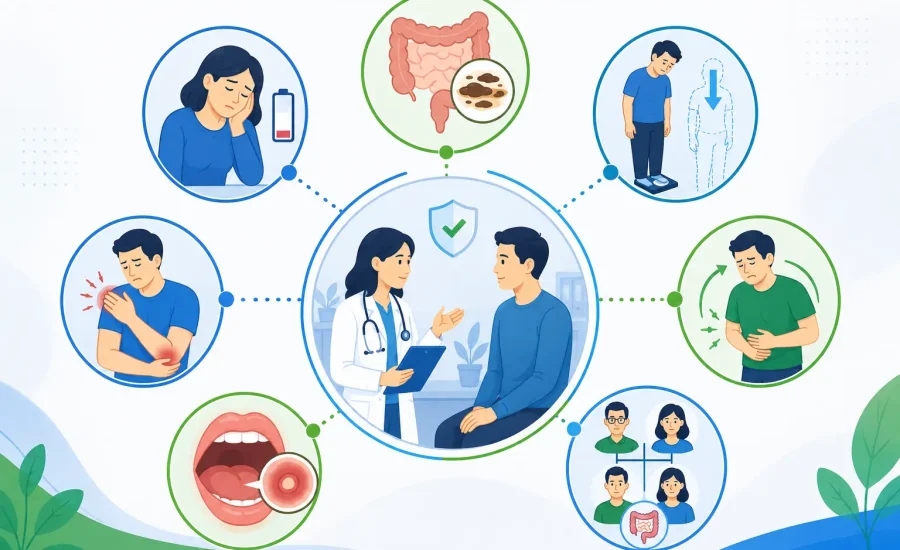
Common Signs
- Ongoing diarrhea (more than 3 bowel movements daily during active disease)
- Tiredness that does not get better even with good rest
- Weight loss you did not try to cause
- Joint pain during active flares
- Belly cramping and pain, often after eating
- Loss of appetite and eating less
- Sores in your mouth (like canker sores)
- Fever when your intestine is actively inflamed

Crohn's Disease Face
Some patients taking long-term steroid medicines notice changes in their face like redness, puffiness around the eyes, or a rounder face.
These changes come from steroids affecting how your body stores fat and holds water, not from the disease itself. Your face usually returns to normal within months of lowering or stopping steroids under doctor care.

Symptoms in Females
Women with Crohn’s disease notice symptoms that change with their menstrual cycle and include both digestive and other body effects.
- Menstrual periods that are irregular, caused by belly inflammation and changes in body chemicals that control hormones
- Digestive symptoms that get worse in the second half of your menstrual cycle
- Anemia from blood loss during periods combined with blood loss in your stool from inflammation
- Pain during intercourse from inflammation in the pelvic area and around the anus
- Trouble getting pregnant when disease is active, which usually improves when the disease calms down
- Higher chance of disease flares during pregnancy, so disease control matters before and during pregnancy
- Ongoing tiredness made worse by anemia and active inflammation
- Problems around the anus including cracks, tunnels, and pockets of infection that drain and cause pain

Undiagnosed Symptoms
Crohn’s disease often starts slowly, and early symptoms might look like irritable bowel syndrome or a stomach infection. Many people delay getting checked because early symptoms are mild.
- Ongoing diarrhea lasting more than 3 weeks even with diet changes
- Visible blood in stool or bleeding from your rectum
- Weight loss without trying to diet
- Low fever during times when inflammation is active
- Pain, swelling, or drainage from the area around your anus suggesting tunneling disease
- Belly pain or cramping that keeps coming back after meals
- Ongoing tiredness that does not go away with rest, and blood tests are normal
- Not feeling hungry or feeling full quickly
- Mouth sores that keep coming back
- In children and teenagers: slow growth and delayed puberty

Crohn's Disease in Children
Children with Crohn’s disease often show slow growth and delayed puberty before clear digestive symptoms show up. The disease in children is often more serious than in adults, with higher rates of scarring and tunneling disease. Children might mention joint pain and tiredness more than belly pain as their main complaints.
Watching the disease closely and controlling it well during childhood is critical. Poor nutrition during the years when children are growing fast harms growth and bone strength, with problems that continue into adulthood. Finding the disease early and keeping it calm with today's biologic medicines helps children grow normally and feel better day to day.

What Causes Crohn's Disease?
Crohn’s disease develops when genetics, immune system problems, and things around you combine. No single cause has been found. The disease happens from multiple factors working together.
Contributing factors include:
- Your immune system reacting wrongly to good bacteria that normally live in your gut
- Gene differences you inherit that affect how your immune system works and how your body cleans up old cells
- Triggers around you including cigarette smoke, which makes the disease worse faster
- Imbalance in the bacteria living in your intestines and loss of good bacteria variety
- Diets high in processed foods that reduce good bacteria types and make your intestinal lining more porous
Crohn's Disease vs Ulcerative Colitis
Telling Crohn’s disease apart from ulcerative colitis is important because it changes how you will be treated and what to expect. Doctors use exam findings, camera views, and tissue samples to tell them apart.
| Feature | Crohn's Disease | Ulcerative Colitis |
|---|---|---|
|
Where it happens |
Any part of digestive tract; usually end of small intestine and colon |
Only colon and rectum; starts at rectum |
|
Pattern |
Patches of disease with healthy areas between |
Ongoing inflammation without patches |
|
How deep it goes |
All the way through the bowel wall |
Only outer and middle layers |
|
Common symptoms |
Belly pain, diarrhea, weight loss |
Bloody diarrhea, urgency, straining |
|
Main complications |
Tunnels, narrowing, deep disease |
Severe toxin buildup, heavy bleeding |
|
Surgical cure |
Possible after surgery; disease can return in new area |
Yes; removing the colon cures it |
Looking inside your bowel with a camera, taking small samples from the colon, and imaging scans help doctors know for sure which disease you have.

How Is Crohn's Disease Diagnosed at CDCH?
Accurate diagnosis needs your medical history, blood and stool tests, camera exam of your bowel, and imaging scans. Working with a Crohn’s disease specialist makes sure diagnosis is correct and your treatment plan fits your specific situation.
Step 1: Detailed symptom and history review
We ask about when your belly pain started, what it feels like, and if it follows a pattern. We check how many bowel movements you have, if there is blood, how much weight you lost, and if you feel generally sick. We learn about family members with digestive diseases and autoimmune conditions. We review what medicines you take, if you smoke, and how you eat because these affect how the disease looks.
Step 2: Physical examination
Our specialist feels your belly to find areas that hurt, lumps, or signs that something is stuck. We look for other body signs of disease including joint pain, skin problems, and eye changes. We check how well you are eating and look at your liver because some patients get bile duct disease.
Step 3: Crohn's Disease Test Panel
Blood work checks if you are anemic, how many platelets you have, if you are getting enough protein, if your liver is working right, and levels of inflammation markers including C-reactive protein and fecal calprotectin. High fecal calprotectin shows how much inflammation is in your bowel. Stool tests check for infection including C. difficile and exclude bacteria and parasites that might look like Crohn's disease.
Step 4: Endoscopic evaluation
A camera scope goes down your throat or through your colon to see your bowel directly and take small tissue samples. The camera shows small sores, cobblestone-like appearance, deep cracks, and areas that are too narrow. Tissue samples under a microscope show deep inflammation, small lumps that form from your immune system, and scarring. A scope down your throat is done when symptoms suggest disease higher up.
Step 5: Imaging review
CT or MRI scans of your small intestine are essential to see the full picture of where inflammation is and what problems exist. Scans show where your bowel wall is thickened, narrow areas, tunnels, pockets of infection, and other issues outside your bowel. Imaging finds small intestine disease that a camera cannot always reach.
Step 6: Results and personalized care plan
We review all your results in detail. We explain where the disease is, how active it is, what problems you might have, and what treatment options exist. We talk about what a good response looks like and how often we will check on you. We answer all your questions before we plan your treatment.
Our Crohn's Disease Treatment Services in Daly City, San Francisco
At CDCH, we give you complete, personalized care matched to how your disease looks and what you want from life.

Crohn's Disease Medication Plans
Anti-inflammatory medicines reduce redness and swelling in your bowel. Immune-calming medicines weaken your immune system's attack on your bowel through chemical pathways. Biologic medicines target specific parts of your immune system causing intestinal inflammation including TNF-inhibitors, anti-integrin agents, and anti-IL-23 agents. Which medicine you take depends on where your disease is, how serious it is, how you responded to past treatments, and your other health conditions.

Crohn's Disease Infusion Treatment
Biologic infusion therapy gives you strong medicines through an IV on a regular schedule. Infusions work best for moderate to serious disease that oral medicines cannot control. Infusions are given in an outpatient setting where nurses watch for any bad reactions or side effects. Regular infusions keep you in remission and stop serious problems like narrowing and tunneling.

Crohn's Disease Surgery Coordination
Surgery becomes necessary when medicines do not work or serious problems develop. Narrowed areas might be stretched or reconstructed to save bowel length. Tunneling disease with pockets of infection might need removal of that bowel section. We help find experienced colon and rectal surgeons and help care for you before surgery, during recovery, and after surgery.

Nutrition and Diet Counseling
We check what nutrients you are missing including iron, vitamin B12, vitamin D, zinc, and calories. We give you eating plans based on what kind of disease you have. We offer feeding support through a tube when you cannot eat enough by mouth. We help fix nutrient shortages and help your bowel heal between flares.

Ongoing Monitoring and Flare Management
We watch your disease using office visits, blood and stool tests, and imaging scans over time. We increase treatment early when blood tests show inflammation before you feel bad. We treat flares quickly when they happen to reduce how much the disease affects you.
Diet and Self-Care for Crohn's Disease
What you eat and how you take care of yourself at home helps you stay in remission alongside your medicines. What works is different for each person based on where the disease is and if it is active.

Diet for Crohn's Disease
- Eating smaller meals more often helps your bowel feel better.
- Cooked or soft foods put less stress on your inflamed bowel.
- Fiber that dissolves easily and plenty of protein help your bowel lining heal.

Worst Foods for Crohn's Disease
Foods that make symptoms worse are different for everyone. High-fiber or high-roughage foods make your bowel work harder and cause bloating when inflammation is active. Worst foods commonly include:
- Greasy and fried foods with a lot of fat
- High-fiber raw vegetables during active flares
- Spicy dishes with hot peppers and other irritants
- Drinks with bubbles and sugar substitutes
- Alcohol, especially too much
- Milk products in people who cannot digest lactose well because their bowel is damaged
Crohn's Disease Self-Care
Taking care of yourself at home alongside medical care helps you feel better and live better. Helpful things to do include:
Writing down what you eat and your symptoms to find out what makes things worse for you
Drinking enough fluids, especially when you have diarrhea and lose more water
Getting regular sleep to help your immune system work better
Lowering stress through calming activities and light exercise
Going to doctor visits on schedule, even when you feel good, to catch problems early
Who Should Seek Crohn's Disease Evaluation at CDCH?
You do not need to wait until symptoms are severe to get checked. Getting checked early often means simpler treatment and fewer problems down the road.
We suggest an evaluation for patients who:
- Have diarrhea lasting more than two weeks
- Notice ongoing tiredness along with digestive symptoms
- Have weight loss you did not plan
- Feel belly pain that keeps coming back in cycles
- Have close family members with Crohn's disease or other bowel diseases
- Notice mouth sores along with stomach symptoms
- Have joint pain that flares when your belly symptoms flare
Patients with Nutritional or Systemic Concerns
- Unexplained fatigue or weakness
- Iron-deficiency anemia not responding to treatment
- Low vitamin D or calcium with no clear cause
- Unexplained weight loss or difficulty maintaining weight
Patients with Related Medical or Family History
- First-degree relative diagnosed with celiac disease
- Personal history of type 1 diabetes, thyroid disease, or another autoimmune condition
- History of unexplained infertility or pregnancy loss
- Children with delayed growth, poor weight gain, or unexplained digestive symptoms
Patients Asking: Can Celiac Disease Cause Weight Gain?
Yes. Weight loss is more commonly discussed, but celiac disease can also cause weight gain. It often happens after starting a gluten-free diet when nutrient absorption improves and caloric intake returns to normal. Some patients also gain weight before diagnosis because persistent nutrient deficiency drives increased appetite. If you have unexplained weight changes in either direction alongside digestive symptoms, evaluation is appropriate.


Why Choose CDCH for Crohn's Disease Treatment in Daly City, San Francisco?
Getting care from an experienced digestive team means your whole health picture gets attention, not just one symptom. At CDCH, we look at inflammation, nutrition, and how you live all together.
- We diagnose Crohn's disease using camera exams with tissue samples, CT and MRI scans, and blood and stool tests
- We treat the disease with anti-inflammatory pills, immune-calming medicines, and biologic infusions
- We teach you how to eat in a way that matches your flare pattern and supports healing
- We find surgical specialists when needed and help with care before and after surgery
- We watch your disease closely with repeated blood and stool tests and imaging to catch flares before they get bad
- We take Medicare, Cigna, Fidelis Care, Beacon, and Carelon insurance
- We can see you the same week when you need quick care
Meet Our Experts
Every patient gets one-on-one time with a doctor at every visit. We do not rush you. We review your test results completely, answer your questions, and make sure you understand your diagnosis and treatment plan fully before you leave. Our team gives steady, careful care for a condition that can otherwise feel unpredictable and hard to manage.

Board-Certified
All providers meet the highest standards of care
Same-Week Appointments
Quick access to expert care when you need it
Local to Bay Area
Serving Daly City, San Francisco & surrounding areas
Convenient Crohn's Disease Treatment in Daly City, San Francisco
Getting good digestive care should not mean driving far or waiting a long time for an appointment. CDCH is located conveniently in Daly City and is easy to reach for patients all across the Bay Area. Our clinic arranges camera exams, imaging, and specialist visits quickly. You do not need a referral from another doctor to book a visit with us.
FAQs About Crohn's Disease

Crohn's disease is an immune-caused inflammatory condition. Your immune system has an abnormal response to good bacteria that normally live in your gut, which leads to ongoing intestinal inflammation. While similar to autoimmune diseases, it is not purely autoimmune in the way some other conditions are.
Yes. Remission is possible and can last with today's biologic medicines. Many patients stay without active inflammation for months to years, especially with good medicines and starting treatment early when disease activity increases.
No. Crohn's disease cannot spread from one person to another. The disease comes from genes you inherit and immune system problems, not from infection.
Stress does not cause Crohn's disease, but stress can make intestinal inflammation worse in people who already have it through the connection between your brain and immune system.
Active inflammation can harm your ability to get pregnant through multiple ways including poor nutrition and body-wide inflammation. Most people get pregnant normally when the disease is calm. Planning pregnancy during calm periods is usually recommended.
A cure is not available now. Medical care stops flares and prevents problems, letting most patients work, socialize, and live fully.
No. How the disease looks varies a lot. Some people develop narrowing; others develop tunneling with pockets of infection. Treatment is made for each person's specific disease and how they respond to medicines.
No. Crohn's disease lasts a lifetime. Children diagnosed early need ongoing medical care as they grow up, but with today's medicines they can do well and have a good quality of life.
Tired of Unpredictable Crohn's Disease Flares?
- Same-week appointments available
- Board-Certified Specialists
- Personalized Treatment Plans